The transformation of a real estate market is often closely linked to the development of infrastructure. A clear example of this phenomenon can currently be seen in the National Capital Region (NCR), where locations along the Regional Rapid Transit System (RRTS) corridor are rapidly emerging as attractive residential and investment destinations. Areas such as Raj Nagar Extension, Siddharth Vihar, Duhai and nearby micro-markets on Delhi-Ghaziabad-Meerut route are witnessing renewed interest from developers, investors and homebuyers alike.
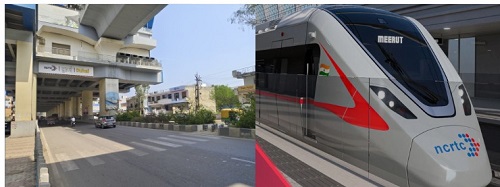 |
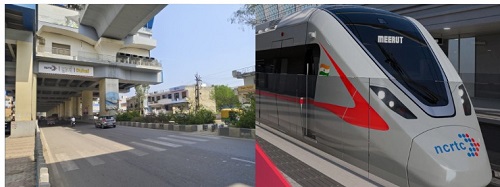
The Delhi–Meerut RRTS is enhancing NCR connectivity, reducing travel time and driving growth in emerging hubs like Duhai and Raj Nagar Extension
The impact of infrastructure development on property markets is not new, but the scale at which connectivity is improving across NCR is creating entirely new growth corridors. The Delhi–Meerut RRTS corridor, India’s first semi-high-speed regional rail system, has significantly reduced travel time between these two cities and towns on the route. Commuters are now able to travel from Meerut to central Delhi in around an hour and from location like Duhai and Raj Nagar in roughly 30–40 minutes, dramatically improving daily connectivity for professionals working in the capital.
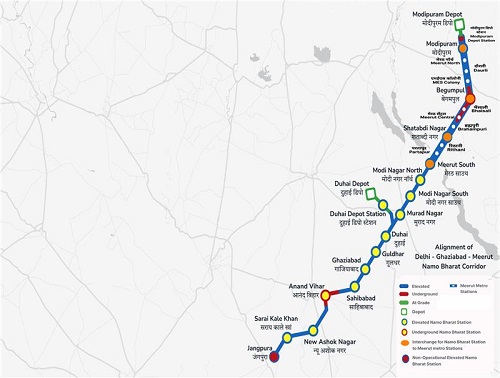 |
Route map of the Delhi–Meerut RRTS corridor, highlighting key stations and emerging growth corridors such as Siddharth Vihar, Duhai and Raj Nagar Extension in NCR
Along with the RRTS, these locations are also benefiting from a strong network of highways and expressways including the Delhi–Meerut Expressway, Eastern Peripheral Expressway, NH-9 and the upcoming rapid urban infrastructure projects. This growing connectivity has made locations such as Raj Nagar Extension, Siddharth Vihar, Duhai increasingly attractive for both end-users and investors seeking value in the NCR housing market.
Rising Demand Driven by Affordability
One of the biggest advantages these locations currently offer is affordability. While the average price of new residential launches in several prime NCR micro-markets such as Gurugram and central Noida has crossed ₹15,000–₹16,000 per square foot in recent years, several projects in Ghaziabad are still available at around ₹9,000–₹11,000 per square foot or in Raj Nagar and Duhai at around ₹6,000–₹8,000 per square foot. This price gap has opened a window of opportunity for first-time homebuyers and middle-income families who wish to stay connected to Delhi without stretching their housing budgets.
Raj Nagar Extension in particular has evolved into one of Ghaziabad’s most active residential clusters over the last decade. With a mix of mid-income and premium developments, the area now hosts thousands of residents and continues to attract new projects. Siddharth Vihar, strategically located near NH-9 and close to Noida, has also gained traction as a well-planned residential zone with improved connectivity to both Delhi and Noida.
Emerging Investor Interest Around Duhai
Beyond the established micro-markets like Raj Nagar extension and Sidharth Vihar, emerging locations such as Duhai are beginning to attract significant investor attention. The presence of an RRTS station in Duhai, combined with its strategic position near the intersection of the Eastern Peripheral Expressway and the Delhi–Meerut corridor, is turning the area into a potential growth hotspot.
Real estate consultants and local brokers note that investors are increasingly exploring these micro-markets because they combine strong future connectivity with comparatively lower land prices. Historically, many of NCR’s successful real estate corridors—from Dwarka Expressway to Noida Expressway—have followed a similar pattern where infrastructure announcements triggered long-term property value appreciation.
Premium Projects Reflect Growing Confidence
The growing confidence of developers in the Ghaziabad market is also reflected in the launch of premium housing projects in the region. Several national and regional developers have already introduced large residential developments in the area, many of which have witnessed strong sales momentum.
Industry stakeholders and experts believe that as connectivity improves further and more infrastructure projects reach completion, Ghaziabad could increasingly emerge as a viable alternative for homebuyers who are priced out of Delhi, Gurugram or central Noida real estate market.
Township Developments on the Horizon
Large township developments are also expected to play a crucial role in shaping the next phase of growth. Integrated townships that combine residential units, commercial spaces, schools and lifestyle amenities are increasingly being planned to cater to the evolving expectations of modern homebuyers.
Commenting on this trend, SAYA Group said the company is planning a major township project in the emerging Duhai region.
“The RRTS and expressway connectivity have given a new lease of life to the Ghaziabad–Meerut corridor. It has also opened up significant opportunities for homebuyers looking for well-connected properties in NCR at a more affordable price point. We have recently secured around 20 acres of land near Duhai in Ghaziabad and are planning to develop a mixed-use township there,” said Vikas Bhasin, Managing Director, Saya Group.
“The project will feature residential units of various configurations, along with commercial spaces and institutional facilities such as schools, creating a self-sustained community. Our aim is to cater to a wide spectrum of homebuyers by offering homes ranging from 1 BHK to 5 BHK with modern amenities while keeping pricing accessible. With the RRTS connectivity and strong road infrastructure, we believe this micro-market has the potential to emerge as one of the most promising residential destinations in NCR,” added Bhasin.
The Next Growth Story of NCR
As infrastructure projects such as the RRTS gets operational and connectivity between Delhi and surrounding cities improves, the real estate map of NCR is gradually being redrawn. Areas that were once considered peripheral are now evolving into well-connected residential hubs.
For homebuyers seeking affordability and connectivity, and for investors looking at long-term appreciation, Raj Nagar Extension, Siddharth Vihar, Duhai and emerging nodes along the RRTS corridor may well represent the next chapter in NCR’s real estate growth story.